
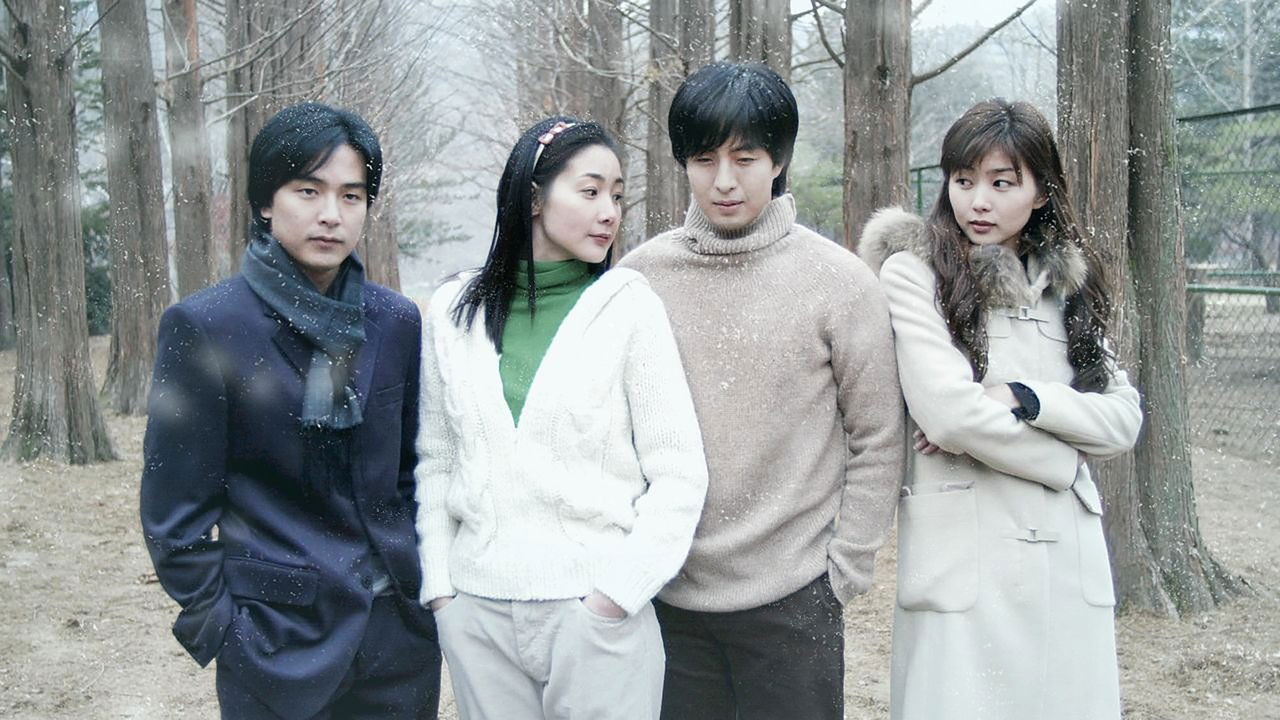

Winter Sonata
2002 · Drama
A woman, who is about to marry her longtime lover, encounters a man who looks just like her first love.
Status: Ended · Episodes: 20
Centrum Dramy: Korean dramas, from Winter Sonata, Autumn in My Heart and Rooftop Prince to My Roommate Is a Gumiho, Doctor Cha and It's Okay, That's Love, and where to watch them
160 Korean dramas, 2000 to 2026, chosen for the whole household.
 16 episodes
 16 episodes
 10 episodes
 16 episodes
 16 episodes
 20 episodes
 4 episodes
 13 episodes
 20 episodes
 16 episodes
 20 episodes
 18 episodes
 16 episodes
 16 episodes
 16 episodes
 12 episodes
 16 episodes
 12 episodes
 2 episodes
 14 episodes
 14 episodes
 16 episodes
 16 episodes
 20 episodes
 24 episodes
 20 episodes
 12 episodes
 21 episodes
 16 episodes
 16 episodes
The Centrum Dramy guide
Centrum Dramy: Korean dramas, from Winter Sonata, Autumn in My Heart and Rooftop Prince to My Roommate Is a Gumiho, Doctor Cha and It's Okay, That's Love
The Korean drama has become one of the world's favourite forms of television, and for good reason. It tells a complete story in a fixed number of episodes, usually sixteen; it gives its characters time to change; it treats first love, friendship and family duty with complete seriousness; and it is made with a polish, in its photography, its music and its clothes, that few national industries can match. Centrum Dramy is a guide to 160 Korean dramas made between 2000 and 2026. Each has its own page, its story, its episodes and cast, and a Watch now button that leads to the official services carrying it in your country.
The catalogue has been chosen for the whole household. Every drama was read through by hand, and the selection favours romance, comedy, gentle fantasy, school stories, medical and workplace series and palace dramas. Crime thrillers, horror, revenge sagas, stories of the battlefield and romance made strictly for adults were left out. What remains is the warm centre of Korean television: a crown prince of the Joseon court who lands on a rooftop in modern Seoul, a housewife who returns to medicine after twenty years as the oldest first-year resident in the hospital, a nine-hundred-year-old fox spirit who finds that he must share his house with a university student.
The numbers give a first idea of the shape. Eighty-nine of the dramas are love stories and ninety-three are comedies. Twenty-nine involve time travel, magic or a second chance at life; fifteen are set in the palaces of old Korea; thirty-eight take place in schools and universities, twenty in hospitals and forty in offices, law firms, kitchens and newsrooms. Nineteen date from the first wave of the 2000s, and forty have appeared since 2023. Twenty-five are short, with ten episodes or fewer, and thirty-eight carry a score of 8 or higher from the viewers of TMDB. In all there are almost 2,900 episodes.
A first-time visitor can begin with any of six dramas. Winter Sonata is the series that carried Korean television across Asia in 2002. Autumn in My Heart began the same cycle two years earlier. Rooftop Prince is the best loved of the time-travel comedies. My Roommate Is a Gumiho turns an old legend into a campus romance. Doctor Cha is a comedy of second chances, and It's Okay, That's Love is a romance between a novelist and a psychiatrist that speaks about mental health with rare openness.
How the guide is laid out
Centrum Dramy is a pale grey page with white boxes and a coral accent. A white bar at the top carries the logo, a rounded search field and a link to the top-rated dramas; beneath it a coral menu bar offers Home, Dramas, Romance, Comedy, Fantasy, School, A-Z, My List and Help. The home page opens with a feature panel: the poster of one drama against a darkened still, with its title, year, kinds and a short summary. Below it the page divides in two. The wider column holds white boxes of posters, five to a row, each with a small coral label and the number of episodes: Popular dramas, Romance, Fantasy and School and youth. The narrower column ranks the Top ten, each with a numbered square, a small poster, its kinds and its score.
The lists are the main way through the catalogue. Romance, Comedy, Drama and Fantasy sort the dramas by kind. Palace dramas, School and youth, Doctors, The workplace, Music and idols and Family sort them by setting. Short series and Long runs divide by length, five lists by year, and Top rated holds the thirty-eight with the strongest scores.
A drama page begins with the poster, the English title and the Korean title in its own script. A line of labels records the year of broadcast, the number of episodes and the TMDB score. The premise is given in a paragraph, the lead actors are named, and the episodes are listed with their air dates. The Watch now button, with its menu of countries, comes at the end. Your country is kept for later visits, and the button opens JustWatch on that drama, showing the services that stream, rent or sell it where you are.
The first wave
Nineteen dramas come from the years between 2000 and 2009, when Korean television first found an audience abroad. The director Yoon Seok-ho made four series named for the seasons, and three are here. Autumn in My Heart opened the cycle in 2000: two baby girls are exchanged by accident in a maternity ward, and the mistake, discovered fourteen years later, separates a brother and sister who are then free, and afraid, to love each other. It made stars of Song Seung-heon, Song Hye-kyo and Won Bin. Winter Sonata followed in 2002. A young woman about to marry meets a man with the face of her first love, who was lost in an accident ten years before. Filmed among the snow and the avenues of Nami Island, with a piano theme that half of Asia could hum, it became a phenomenon in Japan and opened the way for everything since. Summer Scent is the gentlest of the three, a romance between an architect and a florist.
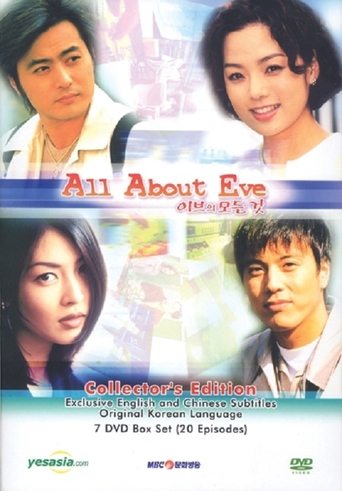
All About Eve, from 2000, is set in a television newsroom, where two young women compete to become the main evening presenter; it ran in more than a dozen countries. Phoenix follows a couple who marry young, part, and meet again ten years later with their fortunes reversed. Love Story in Harvard sends two Korean students to study law and medicine in America, and Ireland is an unusual and thoughtful drama about a young woman adopted abroad who returns to Seoul. Alone in Love, with Son Ye-jin, is a quiet, grown-up story about a divorced couple who keep meeting at the same doughnut shop, and it has been admired ever since for its honesty.
The romantic comedy took shape in these years. In Couple or Trouble an arrogant heiress falls from her yacht, loses her memory, and is told by a handyman she has wronged that she is his housekeeper. Eighteen, Twenty-Nine has a wife of twenty-nine wake after an accident believing she is eighteen, with her schoolgirl's dislike of the boy who is now her husband. The 101st Proposal is about a kind, plain man who has been turned down a hundred times, 9 End 2 Outs about two friends of thirty who share a flat, and Que Sera Sera about four people in the fashion trade. Thank You takes a guilt-stricken surgeon to a small island, where a single mother and her daughter teach him to live again; it is among the most loved dramas of its decade.
High Kick and High Kick Through The Roof are something else entirely: daily situation comedies of half an hour, running to one hundred and sixty-seven and one hundred and twenty-six episodes, about three generations of a family under one roof. They launched a remarkable number of young actors, and their mixture of slapstick and sudden tenderness has seldom been matched. Lee San, Wind in the Palace is the great historical drama of the period, seventy-seven episodes on the life of King Jeongjo, and The Kingdom of the Wind goes back two thousand years to the founding of the kingdom of Goguryeo.
Romantic comedy
The romantic comedy is the form Korean television does best, and the catalogue is rich in it. Protect the Boss is a model of the kind. A young woman with a difficult past and a talent for standing up for herself becomes secretary to the heir of a great company, a spoiled, anxious young man who is terrified of crowds; she protects him, he grows up, and Ji Sung and Choi Kang-hee make the pair irresistible. The Greatest Love, written by the Hong sisters, sets a vain film star, the most popular man in Korea, beside a former pop singer who has fallen out of favour, and gives him a heart that races at the sight of her.
Lie to Me begins with a small untruth: a civil servant, cornered by an old rival, says that she is married to a wealthy hotel owner, and the rumour spreads faster than she can stop it. Marry Me, Mary! gives its heroine two reluctant husbands at once, a rock musician and a producer. My Princess discovers that an ordinary student is the last descendant of the royal house, and assigns a young diplomat to teach her palace manners. Pasta is set in the kitchen of an Italian restaurant in Seoul, where a new head chef dismisses every woman cook on his first morning and one assistant refuses to leave.
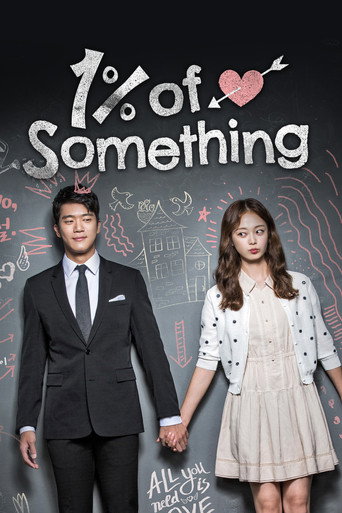
Flower Boy Next Door is about a young editor who has shut herself in her flat and watches the world through a window, until a noisy game designer back from Spain catches her at it. Cunning Single Lady and Emergency Couple both reunite divorced pairs, the first when the former husband becomes a millionaire, the second when the two find themselves interns in the same emergency department. Witch's Romance pairs a fierce reporter of thirty-nine with a cheerful young man of twenty-five, Something About 1% arranges a contract engagement between an heir and a primary school teacher, and Noble, My Love does the same for a company president and a vet.
More recent comedies keep the form fresh. Mad for Each Other introduces two neighbours with short tempers who discover that they visit the same psychiatrist. True to Love sets a dating coach beside a publisher who thinks her books are nonsense. Dreaming of a Freaking Fairy Tale follows a young woman determined to marry a prince and the prince who has sworn off love, Brewing Love a star saleswoman at a drinks company and a brewer who wants only to be left alone with his craft, and Boyfriend on Demand an overworked producer who subscribes to a virtual dating service.
Time travel and gentle magic
Twenty-nine dramas bend the rules of the world a little, nearly always for the sake of a love story. Rooftop Prince is the favourite. In the Joseon era a crown prince, investigating the loss of his princess, is chased to the edge of a cliff with three loyal retainers, a scholar, a guard and a palace attendant, and leaps; the four land on the roof of a small flat in Seoul three hundred years later, in full court dress. The comedy of their education, in lifts, omelettes and tracksuits, is delightful, and the mystery that connects the two centuries is well worked out.
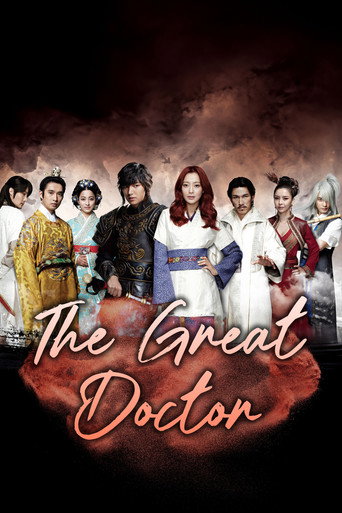
Queen In Hyun's Man sends a scholar from 1694 forward to meet an actress who happens to be playing the queen he serves, and is among the most romantic of all time-travel dramas. The Great Doctor reverses the journey: a plastic surgeon is carried back to the Goryeo court by a royal bodyguard, played by Lee Min-ho, who needs a healer. Splash Splash Love, in only two episodes, drops a schoolgirl who dreads her mathematics examination through a puddle into the reign of King Sejong, where her schoolroom sums make her a prodigy. The Story of Park's Marriage Contract and Heo's Diner both bring people of the Joseon era to modern Seoul.
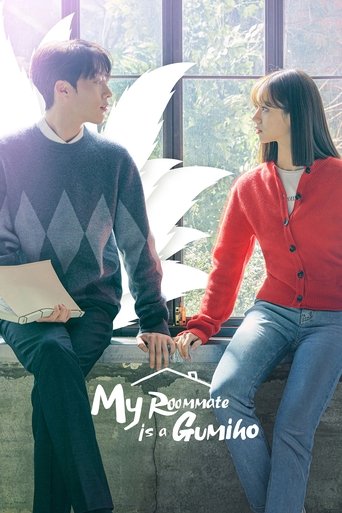
Old legends supply other stories. My Roommate Is a Gumiho takes the nine-tailed fox of folklore, here a courteous professor who has spent nine centuries trying to become human, and has a student swallow by accident the bead that holds his progress. Idle Mermaid is the little mermaid as a job-seeker: a sea princess has a hundred days to find work and love on land. My Man Is Cupid is about a love fairy who has lost his wings, Kokdu: Season of Deity about a guide to the afterlife who visits the world of the living once every ninety-nine years, and The Story of Bihyung: Enchanted Master of the Goblin about a young actor and a goblin of ancient standing.
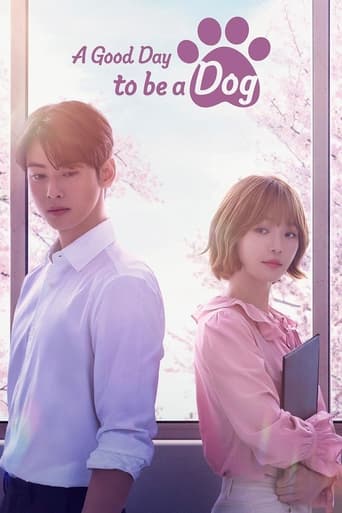
The most inventive use the device to say something about ordinary life. In The Beauty Inside an actress lives for one week of every month in a different body, and falls in love with a man who is unable to recognise faces. In Big the mind of an eighteen-year-old wakes in the body of a thirty-year-old doctor. A Good Day to be a Dog gives a teacher a family curse that turns her into a dog at midnight, and a colleague who is afraid of dogs. Go Back Couple returns a tired husband and wife of thirty-eight to their first year at university, where they see each other again as they once were. Hello, Me! brings a disappointed woman face to face with her confident seventeen-year-old self, and The Miracle We Met gives a man a second life in another's place. Chicago Typewriter links a best-selling novelist with a writer of the 1930s through an old machine.
Palace dramas
The historical drama, known in Korea as sageuk, has its own conventions: the long silk robes, the palace intrigues, the loyal eunuchs and court ladies, the king's lonely duty. Fifteen are listed here. Lee San, Wind in the Palace is the fullest. Lee San, later King Jeongjo, loses his father as a boy of eleven and grows up among enemies, sustained by two childhood friends, one of whom becomes a painter in the royal bureau. The director Lee Byung-hoon was the master of the form, and the seventy-seven episodes move with the ease of a great novel.
The Crowned Clown retells a favourite story: a travelling entertainer who is the image of the king is brought into the palace to take his place, and proves to have the better heart. Yeo Jin-goo plays both. Lovers of the Red Sky is a fantasy of the Joseon court about a young woman painter of genius and an astronomer who reads the stars. To My Beloved Thief gives its heroine two lives, a healer by day and an outlaw who robs the corrupt by night, and Check in Hanyang is a youthful comedy about four trainees at the grandest inn of the capital. Poong The Joseon Psychiatrist, which ran for two seasons, follows a gifted royal physician who is sent away from court and learns, in a village clinic, to heal troubled minds as well as bodies.
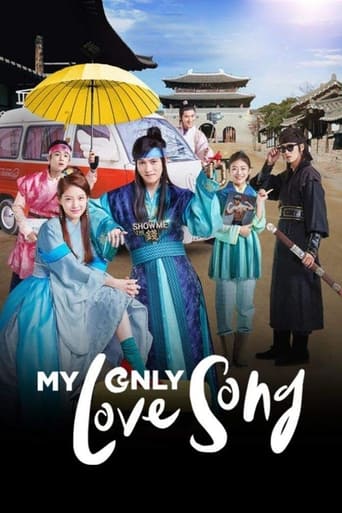
Palace stories mingle easily with other kinds. The time-travel dramas described above all pass through a court, and My Only Love Song sends a spoiled pop star back to the sixth century in a van. Moorim School is set in the present, at a hidden academy that teaches the old martial virtues, and Bride of the Century is a modern romance built on a family legend of long ago.
School and youth
Thirty-eight dramas are set in classrooms and on campuses. The School series, which the national broadcaster has revived for each new generation since 1999, is represented by two entries. School 2013 is the strongest of the whole line: a class of seventeen-year-olds at an ordinary Seoul high school, a temporary teacher who cares too much and a star tutor who claims to care only about results. It made the names of Lee Jong-suk and Kim Woo-bin, whose friendship is the heart of the story. School 2021 moves to a vocational school, where the pupils are learning trades instead of cramming for university.
Master of Study gives a blunt lawyer, a former tearaway himself, the task of getting five pupils from the worst class of a failing school into the best university in the country, and makes an exciting drama out of study methods. Black Dog sees school from the staff room: a young teacher on a temporary contract learns how a school really works, and Seo Hyun-jin's performance is beautifully judged. Cheer Up! forces the top-ranked pupils of an elite school and its dance club into one cheerleading squad. Andante sends a city boy to a country school where volunteering at a hospice is part of the timetable, and I Am a Running Mate follows a student council election.
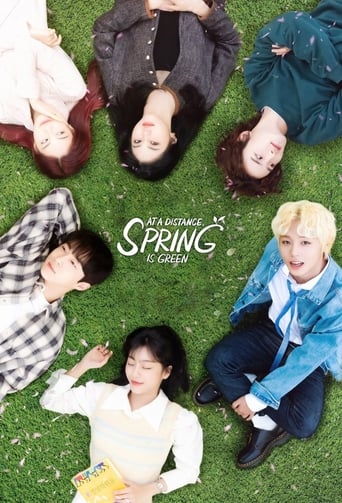
Campus life has its own shelf. At a Distance, Spring is Green is an honest look at three university students whose easy smiles hide money worries and family pressure. Crushology 101 follows a sculpture student and her friends. Twenty Again sends a woman of thirty-eight, who left school early to raise a son, to the same university as that son, where one of her lecturers turns out to be her oldest friend. LOVE.exe merges a modelling department with computer engineering, and Love Revolution, Live On and Re-Feel are short, bright series about first love at seventeen.
Several of the best are about the performing arts. Page Turner, in three episodes, brings together a piano prodigy who loses her sight, her rival, and a pole-vaulter who discovers that he can play. Do You Like Brahms? follows two students at a conservatory, a pianist who is already famous and a violinist who began late and is last in her class; it is a slow, graceful romance with a fine classical score. The Liar and His Lover pairs a secretive composer with a schoolgirl whose voice he hears on a riverside, Spring of Youth sends an idol to university, where he forms a band, and Top Management and IDOL: The Coup look behind the scenes at groups hoping for one success.
Hospitals
Twenty dramas are set among doctors. Doctor Cha was the surprise success of 2023. Cha Jeong-suk qualified in medicine, married, and stayed at home for twenty years; after an illness of her own she takes up her training where she left it, at forty-six, in the hospital where her husband is a senior surgeon who would much prefer that nobody knew. Uhm Jung-hwa plays her with warmth and spirit, and the comedy always remembers how hard the work is.
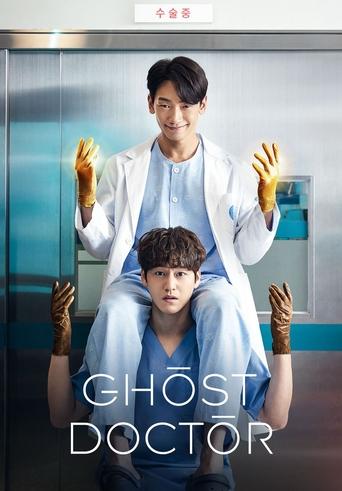
Doctor John is about a brilliant anaesthetist and the young resident he trains, and takes pain itself as its subject. Life is a serious drama about the running of a university hospital when a businessman is appointed its president. Medical Top Team gathers specialists from several departments into one elite unit. Ghost Doctor is the light-hearted exception: a proud surgeon in a coma finds that his spirit can borrow the hands of the clumsiest resident in the building. Dr. Park’s Clinic is a comedy about a doctor who opens a practice of his own and waits for patients, and Birthcare Center, in eight episodes, follows a company executive through two weeks at a postnatal centre, among other new mothers.
It's Okay, That's Love belongs here as well. A best-selling novelist with compulsive habits and a psychiatrist who is anxious about closeness become housemates, with a café waiter who has Tourette's syndrome and a senior doctor completing the household. The writer Noh Hee-kyung treats every condition in the story with respect, and the series changed how Korean television spoke about the mind. Her later drama Dear My Friends is as fine: a group of friends in their seventies, played by the great veterans of the Korean screen, and the daughter who is writing about them.
Offices, kitchens and courts
Forty dramas turn on working life. Korean office comedy has a flavour of its own, half satire and half affection. Gaus Electronics is set in Marketing Team 3 of a household appliance company, the department to which the awkward are sent. Pegasus Market hands a failing supermarket to a manager who is trying to ruin it and to staff who save it in spite of him. On the Verge of Insanity is the serious counterpart, about engineers in their forties holding on to their jobs through a restructuring, and The Dream Life of Mr. Kim follows a manager at a large firm when the title he has lived for is taken away.
Secretaries and assistants lead several. Jugglers is about the women who keep executives' lives running, My Shy Boss about a public relations chief so timid that his own staff have hardly seen his face, and Kiss Sixth Sense about an advertising executive who glimpses the future. Branding in Seongsu sets a marketing director against an intern in the most fashionable district of Seoul, Level Up sends a turnaround specialist to rescue a games company, and Behind Every Star follows the agents of a talent agency, with well-known actors playing themselves as clients.
The law is represented by Miss Hammurabi, written by a serving judge, in which an idealistic newcomer, a careful colleague and a weary presiding judge hear civil cases about workplaces and neighbours; by Suits, the Korean version of the American series; by Divorce Attorney Shin and Strangers Again; and by A New Leaf, in which a ruthless lawyer loses his memory and has to decide what kind of man he was. Argon is set on an investigative news programme that refuses to cut corners. Special Labor Inspector, Mr. Jo gives a former judo teacher the job of making employers obey the rules, and 7th Grade Civil Servant, Good Casting and Man to Man are comedies about intelligence officers under cover.
Families and second chances
Forty-five dramas are family stories, and the weekend family serial is one of the pillars of Korean television. Bread, Love and Dreams was watched by half the country in 2010. Kim Tak-gu, the eldest son of a baking dynasty, grows up outside the family and makes his way back through talent and stubborn good nature, as an apprentice in a neighbourhood bakery; the thirty episodes are full of flour, rivalry and warmth. Liver or Die is about an eldest brother who has spent his life looking after four younger ones, and Meant to Be is a daily serial of one hundred and twenty episodes about a father and daughter.
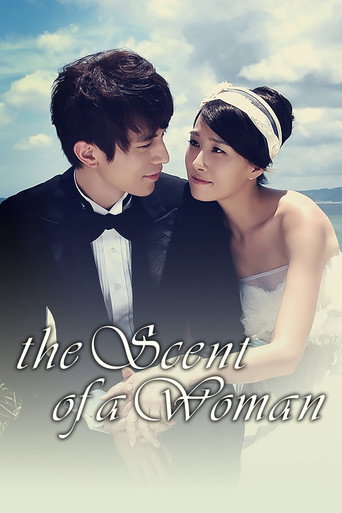
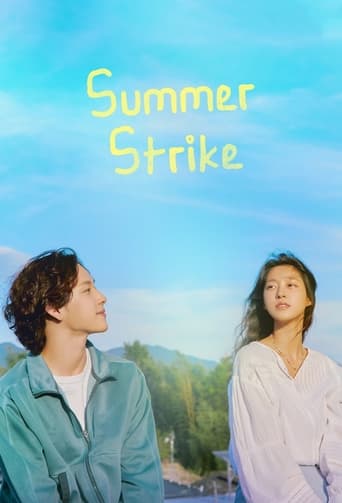
Many of the most affecting dramas are about starting again. Scent of a Woman follows a travel-agency clerk who, given serious news by her doctor, resigns, writes a list of everything she has wanted to do and sets about doing it. Summer Strike is about a young woman who leaves her job and the city for a seaside village, where the librarian hardly speaks. Second To Last Love brings together a television producer and a town-hall official, both in their forties and both sure that romance is behind them. Cinderella at 2AM, Dear Hyeri and My Youth are recent stories of couples meeting again after years apart.
Recipe for Farewell is based on a true account: a husband who is new to cooking learns, recipe by recipe, to make meals for his wife when illness limits what she can eat. If You Wish Upon Me is set at a hospice whose volunteers grant each patient a last wish, and the young man sent there on community service finds a purpose. Tell Me That You Love Me is a quiet romance between a deaf painter and an aspiring actress who learns to sign. These are dramas that treat sorrow gently and leave the viewer comforted.
Lighter family comedies fill out the list. Love, Take Two follows a single mother and her daughter, a medical student, as both begin new chapters. Family: The Unbreakable Bond hides an intelligence agent inside an ordinary household with a sharp-eyed wife. My Husband, Mr. Oh! begins with a pretend marriage, Your House Helper with a man who tidies homes and the lives in them, and Happy Once Again with four former members of a pop group who now run a remarriage agency.
Faces to follow
Part of the pleasure of a catalogue this size is following actors from part to part. Choi Kang-hee, one of the most likeable comic actresses in Korea, leads four dramas here: Protect the Boss, 7th Grade Civil Servant, Good Casting and Hello, Me!. Jang Na-ra, who seems hardly to have aged in twenty years, appears in Go Back Couple, Happy Once Again and Family: The Unbreakable Bond. Kong Hyo-jin, the queen of romantic comedy, is the kitchen assistant of Pasta, the fallen singer of The Greatest Love and the psychiatrist of It's Okay, That's Love.
Seo Hyun-jin can be seen in The Beauty Inside, Black Dog and Love Me; Song Seung-heon in Autumn in My Heart, Summer Scent, My Princess and Dinner Mate; Son Ye-jin in two early roles; and Lee Seo-jin as a king in Lee San, Wind in the Palace and as an agent and a doctor twenty years later. Ji Sung leads Protect the Boss and Doctor John, Jung Kyung-ho Falling for Innocence, in which a hard-hearted investor is changed by a transplant, and Uee High Society, Ho Gu's Love and My Husband, Mr. Oh!.
Younger actors are well represented. Park Ji-hoon appears in three dramas of school and army life, among them The Legend of Kitchen Soldier. Bae In-hyuk and Kim Ji-eun are paired in Check in Hanyang. Mun Ka-young, a child actress grown up, leads Find Me in Your Memory, about a news presenter who remembers everything and an actress who has forgotten the most important thing, and Kim So-hyun and Kim Ji-soo share Page Turner. Many of the idol singers who act can be seen at the start of their second careers, in EXO Next Door, My Runway and The Best Future.
Sixteen episodes
The usual Korean drama is a single season of sixteen episodes, each about an hour, broadcast two a week for two months. The form suits a story with a beginning, a middle and an end: there is time for a slow first meeting, a long misunderstanding and a proper farewell, and the writer, who is usually a single author, knows from the start where the story is going. Ninety of the dramas here have between twelve and twenty episodes.
Shorter forms have multiplied in recent years. Twenty-five dramas in the catalogue have ten episodes or fewer, some made for streaming services and some for the web, with episodes of twenty or thirty minutes. They are the easiest way to begin: Splash Splash Love can be finished in an evening, Page Turner in an afternoon, and My Runway, Romance Full of Life and Way Back Love in a weekend. At the other end, seventeen dramas run to twenty-four episodes or more, among them the daily serials and the long historical epics, and the two High Kick comedies will keep a household supplied for months.
Each drama page lists the episodes with their dates, and the Short series and Long runs lists gather the two ends of the range.
Melodrama, old and new
Beside the comedies stands the melodrama, the form in which Korean television first made its name, and the catalogue follows it across twenty-five years. That Winter, the Wind Blows is among the most beautiful to look at: a gambler presents himself to a blind heiress as her long-lost brother, and the two lonely people come to depend on each other. Song Hye-kyo and Zo In-sung lead it, and the photography of faces in winter light set a new standard. Tree of Heaven, filmed at a hot-spring inn in the snow of Japan, is a compact story of ten episodes with a young Park Shin-hye.
When My Love Blooms moves between 1993, when two students meet at a campus protest, and the present, when they meet again as a businessman and a single mother; the same love story is played by two pairs of actors. A Piece of Your Mind is a hushed romance between a programmer and a recording engineer who works with classical musicians. Discovery of Love is an unusually truthful account of a woman, her present boyfriend and the former one who reappears, and Falling for Innocence softens a ruthless investor with a new heart and the secretary whose company he meant to break up.
The melodrama of the last few years is quieter and shorter. Way Back Love, in six episodes, reunites a young woman with her first love in an unexpected form and gives them one week. Still Shining follows two people from their school days into adult life. Last Summer is about twin brothers, a neighbour and the summers they share, Always Meet Again about a painter who wakes as his eighteen-year-old self, and Love Me about a doctor who learns, in her forties, to let her family back in.
Light evenings
For an evening that asks for little, the catalogue has a shelf of easy pleasures. One Sunny Day is a ten-part romance filmed on Jeju Island, where a man sent to the island for work keeps meeting the same woman. One Day Off follows a literature teacher who takes a different day trip each Saturday; each episode is a small journey to a real town, with its food and its strangers. Bon Appetit is about an office worker whose routine is changed by a cooking class, and Dinner Mate about two people who agree to share an evening meal and tell each other only what they please.
Pump Up the Healthy Love is set in a neighbourhood gym run by a manager with boundless faith in exercise. My Lovely Boxer pairs a retired champion with a sports agent. My Bias, My Boss gives a devoted fan a job in the company her idol helped to found, Wednesday 3:30 PM is a short romance about two old friends pretending to be a couple, and Love with Flaws is about a sports teacher with three brothers and a school chairman who cares a great deal about appearances. Devilish Joy follows a doctor whose memory resets each night and an actress who decides to be remembered anyway.
High Society and Love in Her Bag are stories of young women making their own way in the worlds of retail and fashion, and Ho Gu's Love is the comedy of a mild young man who meets again the swimming champion he adored at school. The Legend of Kitchen Soldier sends a new recruit to an army kitchen, where he turns out to have a gift. And for the youngest members of the household there is Power Rangers Dino Force Brave, a twelve-part adventure in which a team of heroes in bright suits defends the planet with the help of dinosaur spirits.
Something for every age
A household seldom agrees at once, and the catalogue is arranged so that each member has a starting point. Teenagers are well served by the school dramas, where the questions are their own: friendship, fairness, what to do after the last examination. School 2013, Cheer Up! and Live On are good first choices. Younger children will enjoy the fantasies, where a prince in a tracksuit or a teacher who turns into a dog needs little explanation, and the High Kick comedies were made for a family sofa.
Parents may prefer the dramas of working and married life, Go Back Couple, Doctor Cha and On the Verge of Insanity, which are funny about tiredness and generous about middle age. Grandparents, and anyone who remembers the first wave, will find the classics waiting: Winter Sonata, Autumn in My Heart and Thank You have kept all their power. And for an evening when three generations are in the room, Dear My Friends and Bread, Love and Dreams have proved, in a great many countries, to be the dramas on which everyone can agree.
The year lists help here as well. The 2000s holds the classics; 2010 to 2015 is the golden period of the romantic comedy; 2016 to 2019 brought the workplace dramas and the first web series; and 2023 onwards shows the present, with forty titles.
How a Korean drama is made
It helps to know how these series come about. A Korean drama is written by one author, who is as well known as the stars and whose name on a new project is news in itself. For most of the period covered here, episodes were filmed while the series was on the air, sometimes days before broadcast, so that the writer could respond to the audience; a couple whom viewers loved might be given a happier ending than first planned. In recent years more dramas have been completed before release, which has made for tighter stories and more careful photography.
Music matters a great deal. Every drama has its original soundtrack, a set of songs recorded for it by well-known singers and released one by one as the story unfolds, each tied to a character or a couple. A viewer who hears a few bars of the theme from Winter Sonata is back on the snowy avenue at once. Places matter too: the island, the café or the seaside village where a drama was filmed often becomes a destination for travellers, and local councils compete to host productions.
Certain scenes recur so often that fans have names for them, and spotting them is part of the fun: the first meeting that goes badly, the sudden shower and the shared umbrella, the piggyback ride home, the wrist caught as someone turns to leave, the airport farewell. Korean dramas are also famous for their restraint. A first kiss may wait until the tenth episode, and a look across a room can carry a whole chapter. It is that patience, as much as anything, that makes them good company for a household of mixed ages.
Watching in Korean
Every drama on Centrum Dramy was made in Korean, and services abroad offer subtitles in many languages. Newcomers soon pick up a few words that subtitles leave alone, above all the terms of address: oppa, used by a woman to an older brother or boyfriend, sunbae for a senior colleague, ajumma for a middle-aged woman. Levels of politeness are built into Korean grammar, and the moment when two characters agree to drop formal speech is often a turning point of the romance; good subtitles find a way to mark it.
Food is the other language of these dramas. Characters show affection by cooking, by placing a choice morsel on someone's rice, by asking whether the other has eaten. Seaweed soup means a birthday, a shared pot of noodles means friendship, and a table laid with a dozen small dishes means a mother's love. Viewers often report a strong wish for fried chicken or spicy rice cakes at about the fourth episode.
Each drama page gives the Korean title beside the English one, and the search field accepts either, as well as the common alternative English titles under which a series may be known on different services.
How the dramas were chosen
The selection began with a survey of Korean series that carry a score of 7 or higher from viewers, a little over five hundred in all, and was narrowed in three steps. First came the kinds of story that suit a family evening: romance, comedy, fantasy, school, family and working life. Then every remaining drama was read through, and thrillers, horror, revenge stories, battlefield epics and romances made for adult audiences were set aside. Finally the posters and descriptions were checked, and two descriptions were rewritten.
The result leans toward the romantic and the humane. Some of the dramas deal with illness, grief or hard times, as the best Korean writing does, and they are included because they do so with tenderness. Centrum Dramy keeps its dramas to itself among the guides of its family; each title was chosen for this catalogue alone. That is why some of the most famous Korean series are absent, since they already have a home elsewhere, and it is also why a viewer who has seen the famous ones will find here what to watch next.
Using Centrum Dramy
The search field in the top bar is the quickest way to a known drama. It answers as you type and accepts Korean and English titles alike. The A-Z page sets all 160 dramas out in alphabetical order, the Dramas page shows them by popularity, and the Top ten on the home page is a good place to start.
Centrum Dramy keeps a watch-later list for you under the name My List. One press of Add to My List on a drama page enters the drama, and My List in the coral menu displays the entries. They live in the storage of your own browser and are there when you come back; an entry goes when you remove it, and the list page can save the whole list as a file for use on another device.
The help pages cover each part of the catalogue in a few lines: How to watch, Romance, Comedy, Fantasy, Palace dramas, School and youth, Doctors, The workplace, Music and idols, Family, Short and long, Watching in Korean and Year by year, with Finding titles and My List for the tools.
A first month
A newcomer who would like a plan can take four weeks. In the first, try a short drama to learn the rhythm: Splash Splash Love one evening and Page Turner the next. In the second, begin a romantic comedy of sixteen episodes, Protect the Boss or Rooftop Prince, at two episodes an evening. In the third, change key with Doctor Cha or Dear My Friends. In the fourth, go back to the beginning with Winter Sonata, and see where it all started. After that, Top rated will supply the months that follow.
Questions and answers
Questions
What is Centrum Dramy?
Centrum Dramy is a guide to 160 Korean dramas chosen for the whole household, each with its story, cast and a Watch now button to the official services that carry it.
Which drama should I watch first?
Start with Rooftop Prince, Doctor Cha or My Roommate Is a Gumiho. All three are warm, funny and easy to begin.
Is the catalogue suitable for families?
Yes. Every drama was read through by hand, and thrillers, horror, revenge stories and romance made strictly for adults were left out.
How long is a Korean drama?
Most run to sixteen episodes of about an hour. Twenty-five dramas here have ten episodes or fewer.
Are there historical dramas?
Yes. Fifteen palace dramas are listed, among them Lee San, Wind in the Palace and The Crowned Clown.
Can I watch with subtitles?
Yes. Services abroad offer the Korean sound with subtitles in many languages.
How does My List work?
Press Add to My List on any drama page. The list is kept by your browser on your own device and can be saved to a file.
Does Centrum Dramy host episodes or downloads?
Centrum Dramy is a guide only. Every Watch now button opens JustWatch, which lists the official streaming, rental and purchase services for your country.